Dental Bridges in Harrison, NY
A gap where a tooth used to be changed more than your smile. Chewing gets awkward, certain words come out differently, and you may catch yourself covering your mouth when you laugh. A dental bridge fills that space with a replacement tooth that’s held firmly in place, so you can eat, talk, and smile the way you used to.
At Saxon Woods Dental in Harrison, NY, we help patients look at their tooth replacement options based on their oral health, their preferences, and what their mouth needs. An exam shows us whether a bridge is a good fit and which design would work best for you. Call (914) 630-4980 to set up a time to talk.
What is a dental bridge?
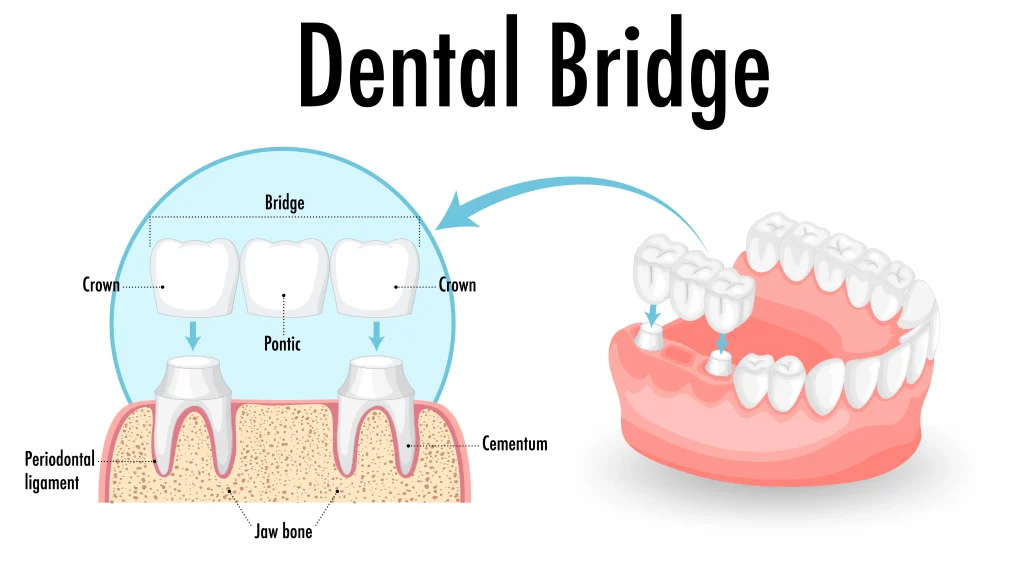
A dental bridge is a fixed restoration that replaces one or more missing teeth. It’s made of artificial teeth, called pontics, which are held in place by your natural teeth or by dental implants, depending on the type of bridge.
A traditional bridge puts crowns on the teeth next to the gap and uses them to hold the replacement tooth. Other designs support the new tooth in different ways, depending on where the gap is and what shape your teeth are in.
A fixed bridge stays put during everyday life, unlike a removable partial denture. It still needs careful cleaning and regular checkups to keep the supporting teeth and gums healthy.
When might we recommend a bridge?
We may talk with you about a bridge when you’re missing one or more teeth and the structures around the gap can support one.
It may come up if:
- You lost a tooth to decay, injury, or another dental problem
- The gap makes it harder to chew or speak
- You want to bring back the look of your smile
- The neighboring teeth and gums are healthy enough to support the planned restoration, where that applies
- You’re weighing a bridge against a removable partial denture or a dental implant
Not everyone is a candidate for every kind of bridge. Before we recommend anything, we look at your remaining teeth, your gum health, your bite, and anything else that affects the plan.
How does bridge treatment work?
The steps depend on which type of bridge you get and what condition your teeth are in. For a traditional bridge, treatment usually goes like this.
1. We examine you and plan
We look at your teeth and gums, evaluate the space where the tooth is missing, and decide whether the teeth on either side can serve as support. We may take X-rays or other images if we need them.
2. We prepare the supporting teeth
For a traditional bridge, we usually reshape the neighboring teeth so crowns can fit over them. Not every bridge design calls for this in the same way.
3. We create your custom bridge
We take impressions or digital scans so the restoration fits your mouth. If it’s appropriate, we may give you a temporary bridge while the final one is being made.
4. We fit and secure the bridge
When the final bridge is ready, we check the fit, the appearance, and your bite. After we make any adjustments, we secure it as planned.
We’ll tell you how many visits to expect and what follow-up care your restoration needs.
What does a bridge do for you?
For the right patients, a bridge offers some practical advantages:
- Easier chewing. Filling the space left by missing teeth can make eating more comfortable.
- A better-looking smile. The replacement tooth is made to match the teeth around it.
- Clearer speech. Replacing certain missing teeth may help with speech changes caused by gaps.
- A fixed restoration. It stays in your mouth instead of coming out each day.
- An alternative to removable dentures. Depending on your needs, a bridge may be a good fixed option.
The benefits vary with where the missing tooth is, the bridge design, and the condition of the supporting structures. A bridge also doesn’t remove the need for preventive dental care.
How do you care for a fixed bridge?
Good cleaning protects the bridge and the teeth or implants that hold it up. Food and plaque can collect around the restoration, especially under the replacement tooth.
Here’s how to look after it:
- Brush twice a day with fluoride toothpaste
- Clean under the artificial tooth with a floss threader, bridge floss, or another tool we recommend
- Use interdental brushes if they suit your bridge design
- Come to regular checkups so we can watch the restoration and your gums
- Call us if the bridge feels loose, cracks, or keeps causing discomfort
The artificial tooth can’t decay, but the natural teeth that support the bridge still can, and your gums can still develop problems. Steady cleaning and professional monitoring keep your mouth healthy.
Dental bridges in Harrison, NY
If you’re thinking about a fixed bridge in Harrison, knowing your options is a good first step. The right restoration depends on how many teeth are missing, where they are, how the nearby teeth are doing, and your overall oral health.
Saxon Woods Dental is at 550 Mamaroneck Avenue, Suite 110, Harrison, NY 10528. A consultation lets you talk through your concerns, learn about your tooth replacement options, and find out whether a bridge fits.
Whether you want to replace one tooth or you’re asking about a bigger gap, we’ll explain the benefits, the limits, and the upkeep of whatever we recommend.
Take the next step toward restoring your smile
Missing teeth don’t mean you’re stuck. If you’re considering a bridge in Harrison, we can help you understand what comes next.
Call us at (914) 630-4980 or request an appointment online to talk about your concerns and book a consultation. A plan built around your mouth makes the decision easier.
FAQ
Does getting a dental bridge hurt?
We generally use local anesthesia when it’s needed, especially if we have to prepare supporting teeth. You may have some sensitivity or soreness afterward. We’ll explain what to expect based on your type of bridge and the condition of your teeth.
How long does a dental bridge last?
A bridge can last many years, though it varies with the design, your cleaning habits, your bite forces, and the health of the supporting teeth. Regular checkups let us monitor it and catch problems early.
Does a dental bridge look natural?
A custom bridge is made to match the color, shape, and size of the teeth around it. How it ends up looking depends on the material, its position, and your own teeth.
Is a bridge better than a dental implant?
Both can replace missing teeth, but they work differently. A traditional bridge generally relies on the teeth beside the gap, which usually need to be prepared. An implant goes into the jawbone and needs time to heal. Your oral health, your bone support, your preferences, and your goals all help decide which one suits you.
How much does a dental bridge cost in Harrison, NY?
The cost depends on the type of bridge, how many teeth it replaces, the materials, and whether you need other treatment. Contact Saxon Woods Dental to ask about consultation fees, treatment costs, and insurance coverage.
Can a bridge replace more than one missing tooth?
Yes. Some bridges replace several teeth, as long as there’s enough support for them. We’ll look at the size of the gap, your bite, and the condition of the supporting teeth or implants before we recommend a plan.