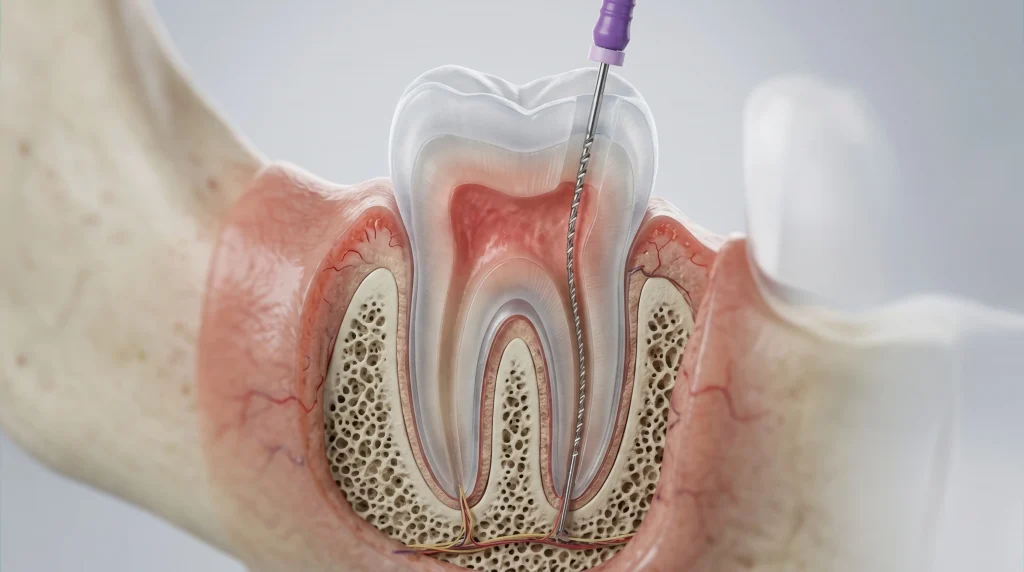
Root Resorption Treatment in Harrison,NY
Protect Your Natural Teeth at Saxon Woods Dental
Root resorption is a natural process where the body essentially mistakes a tooth for an invader and begins breaking it down. Because it can occur internally or externally on the root of the tooth, it often goes unnoticed until it’s too late. With early detection from routine digital X-rays, our team has the best chance of stopping the process and saving your natural tooth.
We take pride in helping you protect your natural smile. Whether you were made aware of the issue by a previous dentist or you’re looking for a second opinion, our team will be able to provide you with the care needed to keep your tooth healthy.
Don’t fight this battle alone. Call Saxon Woods Dental in Harrison today to speak with our compassionate staff and set up a thorough examination.
What Is Root Resorption?
Root Resorption occurs when the body breaks down and absorbs some of a tooth’s hard tissue, such as dentin or cementum. That’s normal when a baby tooth loosens and falls out. In an adult permanent tooth, it isn’t.
Depending on where it starts, root resorption is called internal or external. Dental trauma, inflammation, orthodontic forces, and other things can be behind it. Each type is managed differently, so getting the diagnosis right comes first.
What Are the Types of Root Resorption?
Internal Root Resorption
This begins inside the tooth, in the root canal or pulp space. It’s often linked to inflammation of the tissue in there, and it can follow an injury or other damage to the tooth.
Sometimes it causes no obvious symptoms and only turns up on routine X-rays. Depending on how much damage there is and the condition of the tooth, we may consider a root canal to treat the affected tissue and save what’s left of the tooth.
External Root Resorption
This one develops on the outside surface of the root. A dental injury, orthodontic treatment, inflammation or another underlying cause may be involved.
Where it is and how bad it is decide how we treat it. Some cases only need watching. Others call for restorative treatment, surgery, a specialist’s care or, if the tooth can’t be saved with confidence, an extraction.
External Cervical Root Resorption
External cervical resorption affects the area near the gumline, where the crown meets the root. It can spread under the gum, and it’s hard to spot without a careful exam and the right imaging.
Treatment depends on how much of the tooth is affected and whether we can reach the damaged area and restore it.
What Causes Root Resorption?
There are several possible causes, and the reason isn’t always clear right away. These are some of the things that can contribute:
- Dental trauma, such as a blow to the mouth or an injury to a tooth.
- Inflammation or infection in the tooth’s inner tissues or the structures around it.
- Orthodontic tooth movement, which can shorten roots in some patients.
- Pressure from a nearby impacted tooth or another structure.
- Earlier dental procedures, or damage to the protective tissues around the root.
- Other biological factors that affect the tissues around the tooth.
Working out the likely cause is a big part of planning treatment, and it tells us whether we can stop the process or only manage it.
What Are the Signs and Symptoms of Root Resorption?
Early on, root resorption often doesn’t cause symptoms you would notice. Many cases are found during routine exams or X-rays. When symptoms do show up, they can include:
- Tooth sensitivity or discomfort.
- Pain when you bite or chew.
- Swelling or tenderness around the tooth.
- A change in how a tooth looks or what color it is.
- A visible defect or rough spot near the gumline.
- A loose tooth, in more advanced cases.
Other dental problems can cause these too. If you have tooth pain that won’t go away, swelling or an odd change in a tooth, make an appointment so we can find out why.
What Are the Treatment Options for Root Resorption?
How we treat it depends on the type, the location, how severe it is, what caused it, and how much healthy tooth is left. No single treatment works for everyone.
Root Canal Treatment
We may recommend a root canal for some cases of internal resorption, or for inflammatory resorption linked to infection inside the tooth. We treat the affected pulp, then clean and seal the root canal system.
Whether it’s the right choice depends on your diagnosis and how much damage there is.
Restorative Dental Treatment
If we can reach the damaged area and enough healthy tooth remains, restorative work can rebuild and protect the tooth. Depending on the case, that might be a filling material or a crown.
Surgical Management
Some external resorption, especially near the cervical area, may need surgery so we can reach the damage, remove the affected tissue, and restore the defect when that’s possible.
Monitoring and Follow-Up
In some cases, we will suggest regular exams and X-rays so we can watch for changes. Follow-up matters because resorption progresses differently from one patient to the next.
Tooth Extraction and Replacement Options
When resorption has done extensive damage, and we can’t restore the tooth with confidence, it may need to come out. Depending on your oral health and needs, a dental implant, bridge, or denture could replace it.
We’ll explain the benefits, the limits, and the alternatives before any treatment decision is made.
Frequently Asked Questions About Root Resorption
Is root resorption painful?
Not always. Many cases cause no symptoms early on. Some patients have sensitivity, pain when chewing, swelling or a loose tooth, depending on the type and how far it has gone.
Does root resorption always require a root canal?
No. A root canal can be the right treatment for internal resorption or certain inflammatory cases. Other cases need monitoring, restorative work, surgery or a specialist’s evaluation.
What are the early warning signs of root resorption?
Often there aren’t any. It can develop quietly, with no pain. When symptoms appear, they can include sensitivity, pain when chewing, swelling around the tooth, a change in tooth color or a tooth that moves. Routine exams and X-rays can find a problem before you notice it.
Where can I get root resorption treatment in Harrison, NY?
Saxon Woods Dental is a local practice in Harrison. Call us with your concerns and ask about an evaluation. The dentist will look at your needs and tell you whether treatment here or a referral to a specialist makes more sense.
How is root resorption treated?
It depends on the type and how severe it is. Treatment can include a root canal, restorative work, monitoring or, in severe cases, extraction. Finding it early gives us the best chance of protecting your natural tooth.
Why Choose Saxon Woods Dental for Your Dental Care?
When something is wrong with a tooth, you deserve clear answers, kind care, and guidance you can follow. At Saxon Woods Dental in Harrison, we start by listening to your concerns and helping you understand your oral health.
Here is what we aim to do for you:
- Pay attention to you. Your dental history, your symptoms, and what we find in the exam guide our conversation about your care.
- Explain things clearly. We want you to understand your diagnosis and why we recommend what we do.
- Save natural teeth when we can. When it makes sense, we look at whether the affected tooth can be kept and restored.
- Coordinate your care. If your case needs special expertise, we may refer you to an endodontist or another specialist.
Every patient is different. Our job is to help you understand your options and make informed choices about your dental health.
A change on an X-ray or tooth discomfort you can’t explain leaves you wondering what happens next. You don’t have to work that out alone. Root resorption can progress without symptoms, so an evaluation and follow-up really do matter.
Schedule Your Root Resorption Consultation in Harrison, NY
Worried about root resorption? Please don’t wait for symptoms to get worse. Seeing us early lets us find out how far the damage goes and choose the best way to protect your tooth.
Maybe you noticed something unusual on an X-ray, or you have already been diagnosed with root resorption. Either way, we can go over your options with you.
Ready to get answers? Call Saxon Woods Dental at (914) 630-4980 to talk through your concerns and request an appointment.